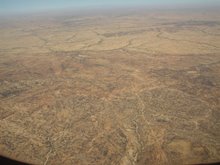
The world is waiting on Darfur. It is expected that UN peacekeepers, under the heavy package deal agreed with Khartoum, will be dispatched soon. It is believed that their presence will substantially reduce violence between rebel and government forces. It is believed that they will protect the displaced and the defenceless from Janjaweed raids. Finally, and perhaps most dangerously, it is believed that their presence will create the conditions for a post-Abuja political settlement and the deployment of large UN-AU hybrid force. In other words, it is assumed that the deployment of UN forces is the first step towards a sustainable and equitable peace in Darfur.
But what will happen if these assumptions are false, or worse are merely political theatre designed to pacify the street rallies calling for 'something' to be done.
Today in Darfur fighting between rebels and government has almost ceased. Instead we are confronted with a complex layer cake of localised conflicts and banditry. This situation is certainly lethal for Darfur’s residents but it is equally treacherous for any outside force, unlikely to understand the highly localised conflicts currently raging in Darfur. Look at the current international force in Darfur: April has been the deadliest month for the African Union since their deployment, with seven soldiers killed in three attacks. Five it is believed were killed by gun-men from one of the rebel factions.
The failures of the AU are blamed on their expertise and capacity, which are certainly limited. But what if the reality is that no military force, regardless of mandate or capacity can end this conflict, what role will peacekeepers then serve?
Instead of bringing stability to Darfur, there is a real danger than any new peacekeeping force will upset the delicate balances of power that have brought a measure of stability to certain areas of Darfur and trigger new violence both against itself and against the population. The current situation in Darfur has been created by Khartoum. Its decisions in 2004 to pull police and military forces out of rural areas and to arm the Janjaweed militia has cost the lives of hundreds of thousands, and left millions destitute. However, Khartoum’s decision was not to fight a war by other means but, particularly since its massive defeats during the September campaign of 2006, it was to make Darfur ungovernable by any party. It chose to create a hell that neither it nor any one could control. Since it achieved this it has sat and watched Darfur burn. At present Khartoum has the strategic upperhand - it has checked the rebels advance - hence there apparent willingness to bend to international pressure at the moment. But it has lost tactical control on the ground, and the danger is that it the UN peacekeepers will be forced to play this role as they seek to protect civilians and humanitarian agencies alike. Thus, they will be doing the government's work.
Peacekeepers were necessary in 2003 and in 2004. They were necessary in 2005 and probably in 2006. But we are too late. ‘Never again’ has become, ‘once again’. We must not compile our mistakes with another. Introducing UN peacekeepers into Darfur is a fools errand. To bring security in the middle of any war, normally means consolidating the authority of the actors that are already present – at present the dominant actor is the government in Khartoum. Peacekeepers faced with a baffling array of rebel groups, factions and militia risk seeking support from the one actor able to offer it, the government. The only solution now of any real effectiveness is to unify the rebels, pressure Khartoum to protect its citizens, and strengthen the African Union.
This is not a good choice, in fact it is a hard, dirty and unpleasant choice. But politics is not about good choices. It is about recognising and taking possibilities. We must not let our dreams cost lives.
Monday, 30 April 2007


Saturday, 21 April 2007
Irony
I won't point out the irony of having written a post apologising for the prolonged absence, closely followed by another prolonged absence. Productivity follows the guilt cycle for the modern Northern European. Forget the lapsed Catholic complex, we are dealing with an entire society suffering from lapsed Protestant complex
I wanted to respond to a comment from a friend about the introspectiveness of the previous post. 'Surely', he cried out, 'what is personal frustration in comparison to the good works that must be done', 'the world is an evil place, and if you didn't know this you were naive.' Or something along those lines (he was neither as facile nor as judgemental as I make him sound). Don't read this post as a justification for the previous post. Read it separately as a reflection on frustration here.
In this sector many people have "taken control" of their lives. They have given up many things, relationships, families, stability and often money in exchange for a life that gave them excitement and adventure. But also, and more than this, they asked for a life that gave them meaning, a sense of accomplishment that extends beyond the personal. These people are not in any way adjusted to the amount of governmental control that is exerted over individual lives in contexts like Sudan. When, as in Darfur, aid work is bogged down in a government constructed minefield of delays, procedural obstructionism and moral ambiguity very quickly people begin to think about what they gave up and can become extremely frustrated with their inability to act or change the situation.
This personal frustration is, for many, compounded by wider concerns, precisely because it was these wider concerns that led to people to aid work. A lot of people's frustration in Sudan at the moment, is that they feel the waters rising around this humanitarian Atlantis, and more and more they feel that their jobs and organisations are complicit in its sinking.
The core problem is that yes the world is a bad place, but in situations like Darfur, if you do not go in with a clear idea of what is Right, you will find your operations diverted by what is possible. Organisations have to choose moral barricades that they will fight for or risk having their operations eroded. Abandoning these barricades is a slippery slope on which means become ends. In other words we start counting how many bags of wheat were distributed rather than how many people ate, we start using all of our influence to send peacekeepers rather than asking how the hell they are might to solve the problem.
Some NGOs, like Save the Children or Oxfam, are highly reflective. They look dispassionately at their own operations and critically reassess their work. These organisations are the ones I look up to, not just for their technical expertise, but also for their ethos and leadership. Other organisations, the UN and the World Bank, are pathologically unreflective. Criticism is dodged by referring to the divisions of the Security Council, weak mandates or lack of coordination.
Here in Sudan, the UN has constructed from scratch a vast complex the size of three football fields to house its HQ. The UN has access to the highest ranks of the Sudanese bureaucracy and it has sources of information that NGOs dream of. And yet, with all of this, the UN suffers from a tremendous lack of moral courage. Everything the UN seems to do is a compromise in which it appears to be the losing party - it never fights, even when its staff is beaten, or its operations rendered subservient to government interests. It is a powerful beast that allows itself to be bound, in exchange for the right to posture. As a result, the single most powerful actor in humanitarianism is often the very actor that lets the lions into the coliseum.
Don't get me wrong, I am not calling for a crusader organisation, a multilateral Amnesty International which bears down on a crisis with frothing outrage. To understand the emergency situations of this world you must be a cynic. But you must be a cynic with moral clarity.
I wanted to respond to a comment from a friend about the introspectiveness of the previous post. 'Surely', he cried out, 'what is personal frustration in comparison to the good works that must be done', 'the world is an evil place, and if you didn't know this you were naive.' Or something along those lines (he was neither as facile nor as judgemental as I make him sound). Don't read this post as a justification for the previous post. Read it separately as a reflection on frustration here.
In this sector many people have "taken control" of their lives. They have given up many things, relationships, families, stability and often money in exchange for a life that gave them excitement and adventure. But also, and more than this, they asked for a life that gave them meaning, a sense of accomplishment that extends beyond the personal. These people are not in any way adjusted to the amount of governmental control that is exerted over individual lives in contexts like Sudan. When, as in Darfur, aid work is bogged down in a government constructed minefield of delays, procedural obstructionism and moral ambiguity very quickly people begin to think about what they gave up and can become extremely frustrated with their inability to act or change the situation.
This personal frustration is, for many, compounded by wider concerns, precisely because it was these wider concerns that led to people to aid work. A lot of people's frustration in Sudan at the moment, is that they feel the waters rising around this humanitarian Atlantis, and more and more they feel that their jobs and organisations are complicit in its sinking.
The core problem is that yes the world is a bad place, but in situations like Darfur, if you do not go in with a clear idea of what is Right, you will find your operations diverted by what is possible. Organisations have to choose moral barricades that they will fight for or risk having their operations eroded. Abandoning these barricades is a slippery slope on which means become ends. In other words we start counting how many bags of wheat were distributed rather than how many people ate, we start using all of our influence to send peacekeepers rather than asking how the hell they are might to solve the problem.
Some NGOs, like Save the Children or Oxfam, are highly reflective. They look dispassionately at their own operations and critically reassess their work. These organisations are the ones I look up to, not just for their technical expertise, but also for their ethos and leadership. Other organisations, the UN and the World Bank, are pathologically unreflective. Criticism is dodged by referring to the divisions of the Security Council, weak mandates or lack of coordination.
Here in Sudan, the UN has constructed from scratch a vast complex the size of three football fields to house its HQ. The UN has access to the highest ranks of the Sudanese bureaucracy and it has sources of information that NGOs dream of. And yet, with all of this, the UN suffers from a tremendous lack of moral courage. Everything the UN seems to do is a compromise in which it appears to be the losing party - it never fights, even when its staff is beaten, or its operations rendered subservient to government interests. It is a powerful beast that allows itself to be bound, in exchange for the right to posture. As a result, the single most powerful actor in humanitarianism is often the very actor that lets the lions into the coliseum.
Don't get me wrong, I am not calling for a crusader organisation, a multilateral Amnesty International which bears down on a crisis with frothing outrage. To understand the emergency situations of this world you must be a cynic. But you must be a cynic with moral clarity.
Monday, 2 April 2007
My apologies
Dear all,
Sorry about the extended delay in posting. I returned to Sudan in the middle of February and simply found picking up the strings of my job, as well as a whole raft of other work took the energy I had been dedicating to blogging. This hopefully won't happen again.
I think their is another reason why I am blogging again - frustration.
When I first returned everything seemed possible and probable. Plans were made, next steps scheduled and strategies put into motion. I was enthusiastic and optimistic. A month and a half later I find that despite the paper created, the workshops attended and the flip chart/white boards filled nothing has changed. Even if our project had the impact on the ground that I would like, still this would not essentially change anything. People would still by dying or living destitute in Darfur. The rebels would still be criminally incompetent, and the government would still be intent on the destruction of all potential challengers to its own hypocritical authority.
I am beginning to believe that the naivety required to be a humanitarian, is in fact a deeply cynical adventure. By pretending that good actions in a bad world can make a difference we are in fact avoiding the much starker and darker reality that if we really want to stop events like Darfur we must be political, partisan and involved.
The problem with recognising this, is that I am confident that we cannot maintain our own moral purity if we do this.
Sorry about the extended delay in posting. I returned to Sudan in the middle of February and simply found picking up the strings of my job, as well as a whole raft of other work took the energy I had been dedicating to blogging. This hopefully won't happen again.
I think their is another reason why I am blogging again - frustration.
When I first returned everything seemed possible and probable. Plans were made, next steps scheduled and strategies put into motion. I was enthusiastic and optimistic. A month and a half later I find that despite the paper created, the workshops attended and the flip chart/white boards filled nothing has changed. Even if our project had the impact on the ground that I would like, still this would not essentially change anything. People would still by dying or living destitute in Darfur. The rebels would still be criminally incompetent, and the government would still be intent on the destruction of all potential challengers to its own hypocritical authority.
I am beginning to believe that the naivety required to be a humanitarian, is in fact a deeply cynical adventure. By pretending that good actions in a bad world can make a difference we are in fact avoiding the much starker and darker reality that if we really want to stop events like Darfur we must be political, partisan and involved.
The problem with recognising this, is that I am confident that we cannot maintain our own moral purity if we do this.
Monday, 12 February 2007
The Iron Fist closes around the Throat of the Humanitarian Sector
Below are three extracts from the government of Sudan's Humanitarian Aid Commission’s (HAC) draft procedures manual. I have put the most disturbing passages in italics.
This document constitutes the final legal stripping of almost all autonomy from both NGOs and INGOs, the main humanitarian actors in Sudan. HAC officials, many of which are believed to be internal security agents, will now be involved in the vetting of all reports, programming, and hiring. They will even be providing the maintenance engineers for humanitarian communications equipment.
There is supposedly a workshop held by HAC in Khartoum to discuss these procedures tomorrow 13 Feb. But this discussion will be pointless - no NGO can object forcibly to these procedures without risking their programming, staff and registration.
This document constitutes the final legal stripping of almost all autonomy from both NGOs and INGOs, the main humanitarian actors in Sudan. HAC officials, many of which are believed to be internal security agents, will now be involved in the vetting of all reports, programming, and hiring. They will even be providing the maintenance engineers for humanitarian communications equipment.
There is supposedly a workshop held by HAC in Khartoum to discuss these procedures tomorrow 13 Feb. But this discussion will be pointless - no NGO can object forcibly to these procedures without risking their programming, staff and registration.
8.1 Recruiting Procedures of National Staff:
- Approval of HAC.
- Approval of Labor Dept. (LD) to advertise for the position in local newspapers.
- Payment of the advertisement fees.
N.B.:
All the above mentioned steps take only one day time.
Advertisement time limit takes 10 to 15 days.
The advertisement should specify clearly position’s duties, responsibilities, qualifications and the necessary logical experience etc).
- Applications should be only received by the Labor Dept. (LD) at HAC.
- Preparation of preliminary short list jointly by both Labor Dept. and the organization within one day time.
- Written test within two days time.
- Oral interview and determination of both the successful candidate and the reserve candidate if there any through a joint panel including one member from each of the following:
1. Labor Dept.
2. NGO general Directorate.
3. The concerned NGO.
4. Procedures Technical Dept.
The selection process takes only one day time based on the readiness of the organization to follow the above mentioned steps unless agreed by the joint panel for going into any further steps.
16. Procedures for Conduction of Surveys and Field Assessments:
All NGOS who are going to carry out any Surveys or field Assessments at either federal or state levels should apply the following procedures:
• The surveys/ field Assessments must be directly related to the nature and field(s) of the NGO work
• Involvement of the related technical Governmental department at federal and state levels within the whole process.
• Involvement of the related Governmental Bodies in writing of the survey final reports results and findings
• Unless approved by HAC, release of the survey findings and results is totally prohibited.
13. Procedures of Media Delegation and Media
Coverage:
· A letter from the organization which includes details and purpose of Media
Delegation.
· The organization shall undertake in writing that the Media Documentary Materials shall be only for humanitarian purposes and not for commercial or any other purposes.
· Approval by the External Information Department, Ministry of Information.
· Submission of copy of the concerned document to HAC prior to any release for approval.
· Written approval of the documentary material by HAC before any further step for the release.
Friday, 9 February 2007
Even the Region is fed up with Bashir...
This is an interesting piece of news. Not widely known in the EU and US, but Egypt has been a key historical power player in Sudan. It notably supported Nimieri's coup d'etat 1969 and was originally supportive of the 1989 coup (before they discovered that the Islamist NIF was behind it). Egypt and Sudan were once a unified province and Egypt still looks South and sees a recalcitrant, little brother that needs to do what it is told.
For years Egypt opposed an independent South Sudan. Gaining Egypt's agreement to the Comprehensive Peace Agreement was an essential step to its succesful negotition and then signature - and this required international guarantees. Egypt now opposes the government's stance in Darfur and supports the deployment of UN troops - your move Bashir.
Egypt, Sudan postpone meeting among silent crisis
Friday 9 February 2007 05:10.
By Wasil Ali
Feb 8, 2007 (The fifth meeting of the joint Egyptian-Sudanese committee’s that was scheduled to be held in Khartoum mid-February was unexpectedly postponed until March, a London based newspaper has reported.
The daily Al-Hayat was quoting an unidentified senior diplomat as saying that there is a "silent diplomatic crisis evolving between the two countries".
Sources close to the Sudanese government told al Hayat that this is the second time that the Egyptian side has requested rescheduling of the meeting since 2005.
The same source was quoted as saying that there has been growing negative sentiments from Cairo towards Khartoum since the mini-summmit held in Libya last month that was boycotted by the Sudanese president Omar Hassan al-Bashir.
The source noted that the Egyptian-Libyan stance al-Bashir’s presidency of the African Union has forced him to withdraw his candidacy. (ST)
For years Egypt opposed an independent South Sudan. Gaining Egypt's agreement to the Comprehensive Peace Agreement was an essential step to its succesful negotition and then signature - and this required international guarantees. Egypt now opposes the government's stance in Darfur and supports the deployment of UN troops - your move Bashir.
Egypt, Sudan postpone meeting among silent crisis
Friday 9 February 2007 05:10.
By Wasil Ali
Feb 8, 2007 (The fifth meeting of the joint Egyptian-Sudanese committee’s that was scheduled to be held in Khartoum mid-February was unexpectedly postponed until March, a London based newspaper has reported.
The daily Al-Hayat was quoting an unidentified senior diplomat as saying that there is a "silent diplomatic crisis evolving between the two countries".
Sources close to the Sudanese government told al Hayat that this is the second time that the Egyptian side has requested rescheduling of the meeting since 2005.
The same source was quoted as saying that there has been growing negative sentiments from Cairo towards Khartoum since the mini-summmit held in Libya last month that was boycotted by the Sudanese president Omar Hassan al-Bashir.
The source noted that the Egyptian-Libyan stance al-Bashir’s presidency of the African Union has forced him to withdraw his candidacy. (ST)
Wednesday, 7 February 2007
A case where America's 'bluster-politik' might work
These measures have the potential to be more effective than are otherwise forthcoming. Damn sight better than the EU is able to muster - and I am an EU national.
Bush approves plan to pressure Sudan - WP
Wednesday 7 February 2007 16:22.
By Glenn Kessler,
Feb 7, 2007 (WASHINGTON) — President Bush has approved a plan for the Treasury Department to aggressively block U.S. commercial bank transactions connected to the government of Sudan, including those involving oil revenues, if Khartoum continues to balk at efforts to bring peace to Sudan’s troubled Darfur region, government officials said yesterday.
The Treasury plan is part of a secret three-tiered package of coercive steps — labeled "Plan B" — that the administration has repeatedly threatened to unleash if Sudan continues to sponsor a campaign of terror.
Some aspects of Plan B have already been stealthily launched, such as stationing four U.S. Army colonels last month as observers on the Sudan-Chad border in full view of Sudanese intelligence. The unannounced move was intended as a signal to Khartoum, which the administration accuses of launching a "quiet war" against Chad’s government to widen the Darfur conflict.
Andrew Natsios, Bush’s special envoy to Sudan, tomorrow will testify before the House Foreign Affairs Committee that the administration has set three triggers that would result in the enhanced sanctions: one, renewed attacks on displacement camps or driving nongovernmental organizations from Darfur; two, stonewalling peace negotiations with rebel forces; and three, refusing to implement a plan pushed by then-U.N. Secretary General Kofi Annan to expand a poorly equipped 7,000-person African Union force into a hybrid A.U.-U.N. force of 17,000 troops and 3,000 police.
Buoyed by booming oil wealth and a close relationship with China, Sudan has shrugged off repeated threats of action. Bush, increasingly frustrated by the impasse, approved key aspects of the plan last month, directing Treasury to come up with a menu of options that would directly affect the government in Khartoum, officials said. ... Sudan’s economy is largely dollar-based, meaning many commercial transactions flow through the United States and making it especially vulnerable to Treasury actions. Indeed, U.S. intelligence, which has stepped up reporting on Sudan in recent months to prepare for a confrontation, believes Khartoum set up a government committee to explore ways of obtaining oil revenues that did not involve dollars, such as barter deals, one official said. Sudan’s government has also unsuccessfully sought new oil contracts that would provide for large upfront payments.
Officials hope a ripple effect of Treasury’s actions would extend to other countries and companies doing business with Sudan, forcing them to reconsider whether they want to be tainted or, more troubling, subjected to Treasury’s scrutiny. "Anything that is controlled by the government we can go after," a senior administration official said. "But the effectiveness will be driven by the participation of our partners," meaning other countries.
Sudan produces about 500,000 barrels of oil a year, which at current market rates is worth about $10 billion. As much as 200,000 barrels are kept for internal consumption, Morrison said, with about 75 percent of the rest sold to China. Partly because some aspects of the plan are still classified, administration officials yesterday were vague about how the plan would cripple Sudan’s oil revenues. One official said Treasury will "have the ability to touch things that touch oil revenues."
The regional government of South Sudan, created through a peace deal two years ago, is supposed to get 50 percent of oil revenues. Officials said they think they had designed the plan so it would harm Khartoum but without impacting the government in the south.
(The Washington Post)
Bush approves plan to pressure Sudan - WP
Wednesday 7 February 2007 16:22.
By Glenn Kessler,
Feb 7, 2007 (WASHINGTON) — President Bush has approved a plan for the Treasury Department to aggressively block U.S. commercial bank transactions connected to the government of Sudan, including those involving oil revenues, if Khartoum continues to balk at efforts to bring peace to Sudan’s troubled Darfur region, government officials said yesterday.
The Treasury plan is part of a secret three-tiered package of coercive steps — labeled "Plan B" — that the administration has repeatedly threatened to unleash if Sudan continues to sponsor a campaign of terror.
Some aspects of Plan B have already been stealthily launched, such as stationing four U.S. Army colonels last month as observers on the Sudan-Chad border in full view of Sudanese intelligence. The unannounced move was intended as a signal to Khartoum, which the administration accuses of launching a "quiet war" against Chad’s government to widen the Darfur conflict.
Andrew Natsios, Bush’s special envoy to Sudan, tomorrow will testify before the House Foreign Affairs Committee that the administration has set three triggers that would result in the enhanced sanctions: one, renewed attacks on displacement camps or driving nongovernmental organizations from Darfur; two, stonewalling peace negotiations with rebel forces; and three, refusing to implement a plan pushed by then-U.N. Secretary General Kofi Annan to expand a poorly equipped 7,000-person African Union force into a hybrid A.U.-U.N. force of 17,000 troops and 3,000 police.
Buoyed by booming oil wealth and a close relationship with China, Sudan has shrugged off repeated threats of action. Bush, increasingly frustrated by the impasse, approved key aspects of the plan last month, directing Treasury to come up with a menu of options that would directly affect the government in Khartoum, officials said. ... Sudan’s economy is largely dollar-based, meaning many commercial transactions flow through the United States and making it especially vulnerable to Treasury actions. Indeed, U.S. intelligence, which has stepped up reporting on Sudan in recent months to prepare for a confrontation, believes Khartoum set up a government committee to explore ways of obtaining oil revenues that did not involve dollars, such as barter deals, one official said. Sudan’s government has also unsuccessfully sought new oil contracts that would provide for large upfront payments.
Officials hope a ripple effect of Treasury’s actions would extend to other countries and companies doing business with Sudan, forcing them to reconsider whether they want to be tainted or, more troubling, subjected to Treasury’s scrutiny. "Anything that is controlled by the government we can go after," a senior administration official said. "But the effectiveness will be driven by the participation of our partners," meaning other countries.
Sudan produces about 500,000 barrels of oil a year, which at current market rates is worth about $10 billion. As much as 200,000 barrels are kept for internal consumption, Morrison said, with about 75 percent of the rest sold to China. Partly because some aspects of the plan are still classified, administration officials yesterday were vague about how the plan would cripple Sudan’s oil revenues. One official said Treasury will "have the ability to touch things that touch oil revenues."
The regional government of South Sudan, created through a peace deal two years ago, is supposed to get 50 percent of oil revenues. Officials said they think they had designed the plan so it would harm Khartoum but without impacting the government in the south.
(The Washington Post)
Subscribe to:
Posts (Atom)